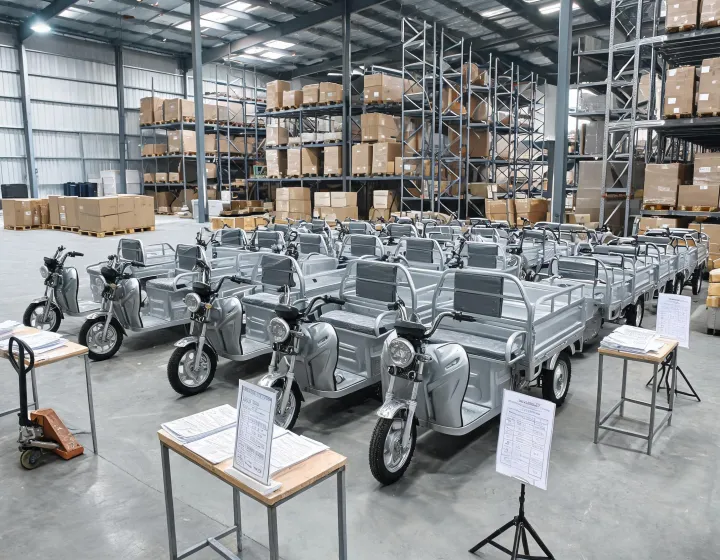
Electric tricycle factory inquiry routes for business buyers

US distribution · fleet programs · institutions

Wholesale electric tricycle requirements change with the buyer's use case

A factory search becomes more useful when the intended channel, environment and approval route are explicit. We translate each project into measurable questions while leaving stock, capability, performance and compliance subject to the proposed supplier and exact item.

  1. Choose the buyer route.
  2. Define the electric tricycle and variants.
  3. Name evidence and sample questions.
  4. Compare one delivery scope.
Describe the buyer route

Distributor assortment

Background: a US distributor may need several vehicle types, colors or presentations under one launch window. Process: separate each configuration and quantity; define frame material, wheel size, motor/controller rating, battery chemistry and capacity, dimensions and weight; request retail pack and carton details. Decision: compare MOQ, configuration setup, samples, pack ratio, quotation scope and shipment assumptions per SKU rather than averaging unlike items.

Fleet or institutional program

Background: a program may specify passenger, cargo or facility use across payload groups. Process: identify the vehicle type, intended use, size basis, surface, intended use and quantity by configuration. Ask the supplier to state how a proposed sample relates to every variation. Decision: document what the sample establishes and request exact-item evidence for any claimed performance or standard instead of relying on a family label.

School, facility or institutional buy

Background: receiving, storage, recurring use and set completeness may matter alongside unit cost. Process: list pieces per set, charger or accessory scope where relevant, storage pack, identifying marks and delivery constraints. Decision: evaluate total procurement scope, replacement assumptions and documentation against the same receiving basis; suitability remains the buyer's decision.

Promotional or event program

Background: branding and presentation can dominate the decision while physical construction still affects feasibility. Process: control configuration revision, color references, print position, proof method and individual packaging. Decision: approve an identified physical sample or stated review basis; a digital rendering alone does not confirm scale, surface interaction or finished appearance.

Trade-offs that must stay visible

Lower unit figure versus equivalent scope

A smaller number may omit configuration setup, samples, individual packing, cartons, freight or the requested construction. Compare in one currency and quantity basis after the supplier states inclusions and exclusions.

Reference sample versus exact configuration

A related sample may be useful for general construction or general finish, but different frame material, wheel specification, battery, frame specification or branding limits what can be concluded.

Product-family statement versus exact-item evidence

A broad test report, certificate or standard reference is not proof for a quoted model. Ask for model identifiers, revision, issuer, test conditions and applicability to the intended US use.

Retail language versus wholesale outcome

Terms such as passenger-ready or commercial do not define measurable construction or performance. Translate them into frame geometry, wheel size, material, test, environment and acceptance questions.

Connect the use case to the RFQ

State the buyer channel, intended use, environment, configuration, quantities, destination and evidence questions. Supplier suitability and timing require case-specific confirmation.

Mark unknowns for supplier confirmation. Do not enter payment-card or sensitive personal information.

Submitting shares these details for this procurement request. Read the Privacy Policy and Terms of Service.